

What is the thermal conductivity of pu sandwich panels?
Jan 16, 2026
Leave a message
As a supplier of PU sandwich panels, I often encounter questions from customers regarding the thermal conductivity of these panels. Understanding the thermal conductivity of PU sandwich panels is crucial for making informed decisions in various construction and insulation applications. In this blog post, I will delve into the concept of thermal conductivity, explain how it relates to PU sandwich panels, and discuss its significance in building projects.
What is Thermal Conductivity?
Thermal conductivity, denoted by the symbol λ (lambda), is a measure of a material's ability to conduct heat. It is defined as the quantity of heat (Q) that passes through a unit area (A) of a material in a unit time (t), driven by a unit temperature difference (ΔT) across a unit thickness (d) of the material. Mathematically, it can be expressed as:

λ = (Q × d) / (A × t × ΔT)
The SI unit of thermal conductivity is watts per meter-kelvin (W/(m·K)). A material with a high thermal conductivity conducts heat easily, while a material with a low thermal conductivity is a good insulator, resisting the flow of heat.
Thermal Conductivity of PU Sandwich Panels
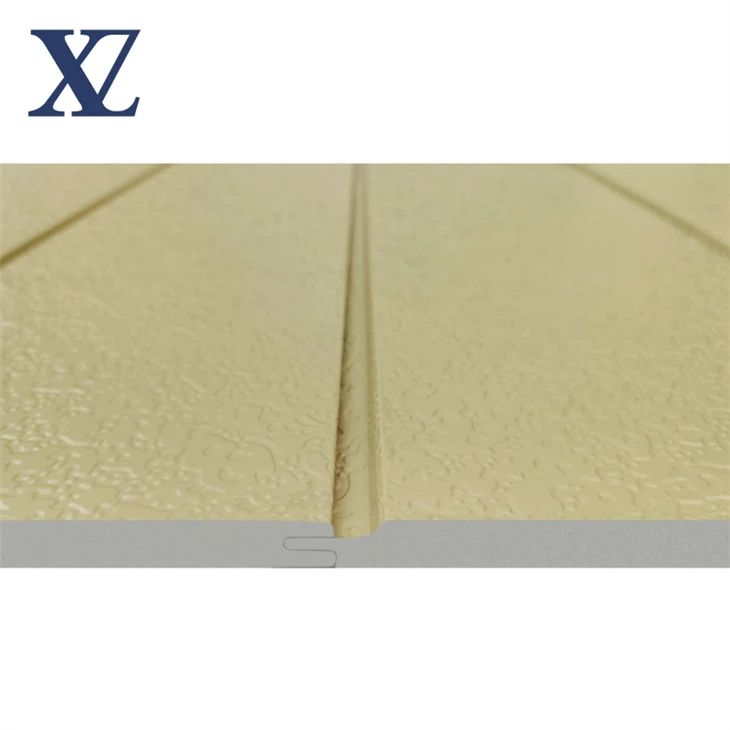
PU sandwich panels consist of a core material, typically polyurethane foam, sandwiched between two outer layers, which can be made of various materials such as steel, aluminum, or fiberglass. The thermal conductivity of a PU sandwich panel is primarily determined by the thermal conductivity of its core material, as the outer layers usually have a relatively small impact on the overall thermal performance.
Polyurethane foam is known for its excellent insulation properties, with a low thermal conductivity. The thermal conductivity of polyurethane foam used in sandwich panels typically ranges from 0.020 to 0.025 W/(m·K). This low value indicates that polyurethane foam is a highly effective insulator, reducing heat transfer through the panel.
The actual thermal conductivity of a PU sandwich panel may vary depending on several factors, including the density of the polyurethane foam, the thickness of the panel, and the presence of any additional insulation layers or coatings. Higher density foams generally have a slightly higher thermal conductivity, but they also offer greater mechanical strength. Thicker panels provide better insulation, as there is more material to resist the flow of heat.
Significance of Thermal Conductivity in Building Projects
The thermal conductivity of PU sandwich panels plays a crucial role in building energy efficiency and comfort. In cold climates, a low thermal conductivity panel helps to keep the interior of a building warm by reducing heat loss through the walls and roof. This reduces the energy required for heating, resulting in lower energy bills and a smaller carbon footprint.
In hot climates, a low thermal conductivity panel helps to keep the interior cool by reducing heat gain from the outside. This reduces the energy required for air conditioning, again leading to energy savings and increased comfort.
In addition to energy efficiency, the thermal conductivity of PU sandwich panels also affects the fire safety and acoustic performance of a building. Polyurethane foam is a flammable material, but it can be treated with fire retardants to improve its fire resistance. The low thermal conductivity of the panel helps to slow down the spread of fire, providing additional time for evacuation.
The acoustic performance of a building is also influenced by the thermal conductivity of its walls and roof. A low thermal conductivity panel can help to reduce noise transmission, providing a quieter and more comfortable indoor environment.
Applications of PU Sandwich Panels
PU sandwich panels are widely used in various construction applications, including industrial buildings, commercial buildings, residential buildings, and cold storage facilities. Some of the common applications of PU sandwich panels include:
- Exterior Insulation Wall Panels: PU sandwich panels are commonly used as exterior insulation wall panels in both new construction and retrofit projects. They provide excellent insulation, weather resistance, and aesthetic appeal. Exterior Insulation Wall Panels
- Roof Panels: PU sandwich panels are also used as roof panels in industrial and commercial buildings. They provide a lightweight and cost-effective solution for roofing, with excellent insulation and waterproofing properties.
- Partition Walls: PU sandwich panels can be used as partition walls in commercial and residential buildings. They provide a quick and easy way to divide a space, while also providing insulation and soundproofing. Prefab Insulated Interior Wall Panels
- Cold Storage Facilities: PU sandwich panels are ideal for use in cold storage facilities, as they provide excellent insulation and temperature control. They help to maintain a consistent temperature inside the facility, reducing energy consumption and preventing spoilage of stored goods.
Conclusion
The thermal conductivity of PU sandwich panels is a critical factor in building energy efficiency, comfort, fire safety, and acoustic performance. Polyurethane foam, the core material of PU sandwich panels, has a low thermal conductivity, making it an excellent insulator. The actual thermal conductivity of a PU sandwich panel may vary depending on several factors, including the density of the foam, the thickness of the panel, and the presence of any additional insulation layers or coatings.
PU sandwich panels are widely used in various construction applications, including industrial buildings, commercial buildings, residential buildings, and cold storage facilities. They provide a cost-effective and energy-efficient solution for building insulation, while also offering excellent weather resistance, fire safety, and acoustic performance.
If you are considering using PU sandwich panels in your next building project, I encourage you to contact us to discuss your specific requirements. Our team of experts can help you select the right panel for your application, based on your budget, energy efficiency goals, and other requirements. We offer a wide range of Polyurethane Sandwich Panels with different thicknesses, densities, and surface finishes to meet your needs.
References
- ASHRAE Handbook - Fundamentals. American Society of Heating, Refrigerating and Air-Conditioning Engineers.
- ISO 10456:2007 Thermal performance of building materials and products - Declared and design values. International Organization for Standardization.
- EN 13162:2012 Thermal insulation products for buildings - Factory made products of expanded polystyrene (EPS) - Specification. European Committee for Standardization.