

How to measure the insulation performance of EPS foam sandwich panel?
Sep 11, 2025
Leave a message
Hey there! As a supplier of EPS Foam Sandwich Panels, I often get asked about how to measure the insulation performance of these panels. It's a crucial aspect, especially for those looking to use them in construction projects where energy efficiency is a top priority. In this blog, I'll share some practical ways to measure the insulation performance of EPS foam sandwich panels.
Understanding the Basics of EPS Foam Sandwich Panels
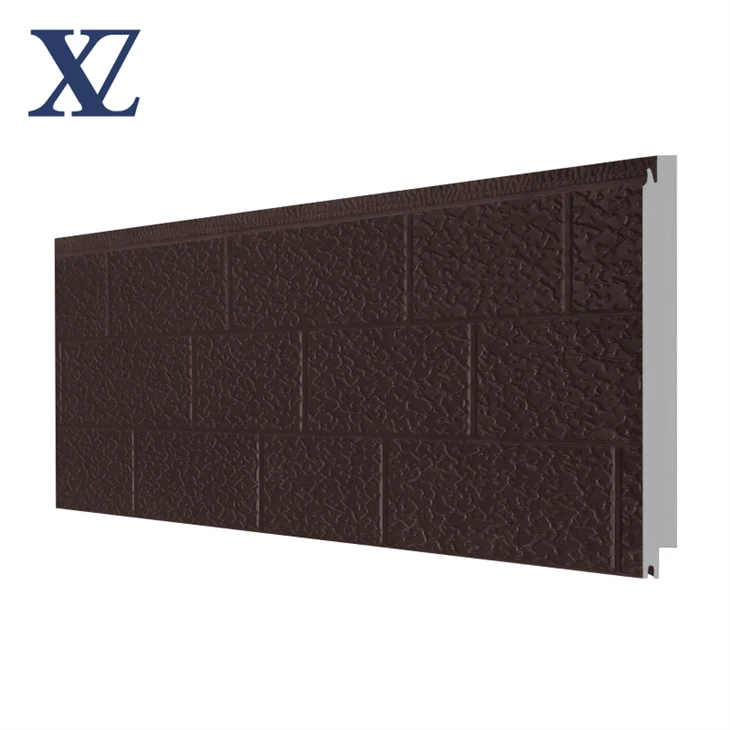
Before we dive into the measurement methods, let's quickly go over what EPS foam sandwich panels are. EPS stands for Expanded Polystyrene, which is a lightweight and rigid plastic foam. These panels consist of an EPS core sandwiched between two outer layers, usually made of metal or other materials. They're widely used in building construction for walls, roofs, and partitions because of their excellent insulation properties, lightweight nature, and ease of installation. You can check out our EPS Composite Panels for more details.
Why Measuring Insulation Performance Matters
Measuring the insulation performance of EPS foam sandwich panels is essential for several reasons. Firstly, it helps in ensuring that the panels meet the required energy efficiency standards. This is particularly important in regions with strict building codes regarding energy conservation. Secondly, accurate measurement allows you to compare different panels and choose the ones that offer the best insulation for your specific project. Lastly, it gives you an idea of how much energy you can save in the long run by using well-insulated panels.
Methods to Measure Insulation Performance
1. Thermal Conductivity (k-value)
The thermal conductivity, often referred to as the k-value, is one of the most common ways to measure the insulation performance of a material. It measures how well a material conducts heat. A lower k-value indicates better insulation. To measure the k-value of an EPS foam sandwich panel, you can use a heat flow meter.
Here's how it works:
- Set up the test apparatus: Place the panel between two plates with different temperatures. One plate is heated, and the other is cooled. The heat flow meter measures the amount of heat that passes through the panel from the hot plate to the cold plate.
- Measure the temperature difference: Use thermocouples to measure the temperature difference between the two plates. The greater the temperature difference, the more heat will flow through the panel.
- Calculate the k-value: Once you have the heat flow rate and the temperature difference, you can calculate the k-value using the formula:
[k = \frac{q \cdot d}{\Delta T}]
where (k) is the thermal conductivity, (q) is the heat flow rate, (d) is the thickness of the panel, and (\Delta T) is the temperature difference across the panel.
It's important to note that the k-value can vary depending on factors such as the density of the EPS foam, the thickness of the panel, and the temperature at which the measurement is taken.
2. R-value
The R-value is another commonly used measure of insulation performance. It's the reciprocal of the thermal conductivity, so a higher R-value means better insulation. The R-value takes into account the thickness of the panel, which is why it's often used in building applications.
To calculate the R-value of an EPS foam sandwich panel, you can use the following formula:
[R = \frac{d}{k}]
where (R) is the R-value, (d) is the thickness of the panel, and (k) is the thermal conductivity.
For example, if you have a 70mm EPS Sandwich Panel with a k-value of 0.035 W/(m·K), the R-value would be:
[R = \frac{0.07}{0.035} = 2 \ m^2 \cdot K/W]

The R-value is useful for comparing the insulation performance of different panels with different thicknesses. It gives you a better idea of how well a panel will resist heat flow in a real-world application.
3. Air Leakage Testing
In addition to measuring the thermal conductivity and R-value, it's also important to test the air leakage of EPS foam sandwich panels. Air leakage can significantly reduce the insulation performance of a panel by allowing warm air to escape and cold air to enter.
To test the air leakage of a panel, you can use a blower door test. Here's how it works:
- Seal the panel: Place the panel in a test chamber and seal all the edges to prevent air from leaking around the panel.
- Create a pressure difference: Use a blower door to create a pressure difference between the inside and outside of the test chamber. This simulates the pressure differences that occur in a real building.
- Measure the air leakage: Use a flow meter to measure the amount of air that leaks through the panel. The lower the air leakage rate, the better the insulation performance of the panel.
Factors Affecting Insulation Performance
There are several factors that can affect the insulation performance of EPS foam sandwich panels. These include:
- Density of the EPS foam: A higher density foam generally has better insulation properties because it has fewer air pockets.
- Thickness of the panel: Thicker panels usually offer better insulation than thinner ones. For example, a 50mm EPS Sandwich Panel will have a lower R-value than a 70mm panel.
- Quality of the installation: Proper installation is crucial for ensuring good insulation performance. Any gaps or cracks in the installation can allow air to leak and reduce the effectiveness of the insulation.
- Environmental conditions: The insulation performance of the panels can also be affected by environmental factors such as temperature and humidity. For example, the k-value of EPS foam can increase at higher temperatures.
Conclusion
Measuring the insulation performance of EPS foam sandwich panels is an important step in ensuring energy efficiency and meeting building codes. By using methods such as thermal conductivity (k-value), R-value, and air leakage testing, you can accurately assess the insulation properties of the panels. Remember to consider factors such as density, thickness, installation quality, and environmental conditions when evaluating the performance of the panels.
If you're interested in purchasing EPS foam sandwich panels for your project, feel free to reach out to us. We're here to help you choose the right panels and ensure that you get the best insulation performance for your investment.
References
- ASHRAE Handbook of Fundamentals. American Society of Heating, Refrigerating and Air-Conditioning Engineers.
- ASTM C177 - Standard Test Method for Steady - State Heat Flux Measurements and Thermal Transmission Properties by Means of the Guarded - Hot - Plate Apparatus. American Society for Testing and Materials.