

What is the shear strength of black sandwich panels?
Sep 25, 2025
Leave a message
Hey there! As a supplier of Black Sandwich Panels, I often get asked about the shear strength of these panels. So, I thought I'd take a moment to break it down for you in this blog post.
First off, let's talk about what shear strength actually means. Shear strength is the ability of a material to resist forces that cause one part of the material to slide past another part in a direction parallel to their plane of contact. In simpler terms, it's how well the panel can handle being pushed or pulled sideways without falling apart.
Now, when it comes to black sandwich panels, their shear strength is influenced by several factors. The core material is a big one. Most black sandwich panels have a core made of materials like polyurethane (PU), polystyrene, or mineral wool. Each of these core materials has different properties that affect the panel's shear strength.
For example, PU core panels are known for their excellent insulation properties, but they also offer good shear strength. The chemical structure of polyurethane allows it to bond well with the outer layers of the panel, creating a strong and stable structure. This means that when a shear force is applied, the panel can distribute the load evenly across its surface, reducing the risk of failure.
On the other hand, polystyrene core panels are lightweight and cost - effective. However, their shear strength might not be as high as that of PU core panels. Polystyrene is a bit more brittle, and it may not be able to withstand as much lateral force without deforming or breaking.
Mineral wool core panels are often used in applications where fire resistance is a priority. They also have decent shear strength, thanks to the fibrous nature of the mineral wool. The fibers interlock with each other and the outer layers of the panel, providing some resistance against shear forces.
The outer layers of the black sandwich panels also play a crucial role in determining shear strength. These layers are usually made of metal, such as steel or aluminum. The thickness and quality of the metal can have a significant impact. Thicker metal sheets generally offer more resistance to shear forces. For instance, a panel with a 0.5 - millimeter thick steel outer layer will have a different shear strength compared to one with a 0.8 - millimeter thick steel outer layer.
The manufacturing process of the black sandwich panels is another factor. A well - made panel will have a strong bond between the core and the outer layers. If the bonding is weak, the panel is more likely to fail under shear stress. At our company, we use advanced manufacturing techniques to ensure that the core and the outer layers are firmly attached. This includes using high - quality adhesives and precise lamination processes.
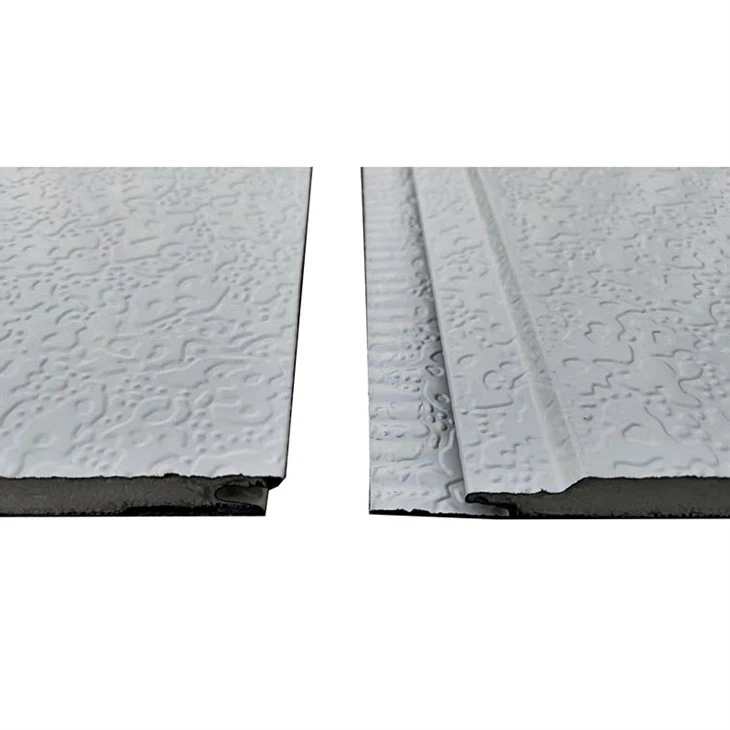

To measure the shear strength of black sandwich panels, we typically use a testing machine. The panel is placed in the machine, and a gradually increasing shear force is applied until the panel fails. The maximum force that the panel can withstand before failure is recorded as its shear strength. This value is usually expressed in units of force per unit area, such as pounds per square inch (psi) or kilopascals (kPa).
So, why is shear strength important? Well, in construction applications, black sandwich panels are often used in walls and roofs. They need to be able to withstand various forces, including wind, seismic activity, and the weight of equipment or people on the structure. If the shear strength of the panels is too low, the structure may be at risk of collapse during extreme weather conditions or other unforeseen events.
For example, in areas prone to high winds, the panels need to be able to resist the lateral forces exerted by the wind. If the panels can't handle the shear stress, they may start to detach from the structure or even break apart, causing significant damage.
In industrial settings, black sandwich panels are sometimes used in partitions or as part of machinery enclosures. Here, they may be subjected to vibrations or impacts. Good shear strength ensures that the panels can maintain their integrity and continue to function properly.
Now, if you're in the market for black sandwich panels, you might also be interested in our other products. We offer Lightweight Insulated Wall Panels, which are great for energy - efficient buildings. These panels combine the benefits of light weight and excellent insulation, making them a popular choice for both residential and commercial construction.
Our PU Sandwich Wall Panel is another top - selling product. With its high - quality polyurethane core and strong outer layers, it offers a good balance of insulation, strength, and durability.
And if you're looking for something for interior decoration, our White Interior Wall Decorative Board is a great option. It not only looks good but also provides some level of insulation and soundproofing.
If you're interested in purchasing black sandwich panels or any of our other products, we'd love to hear from you. Whether you're a contractor, an architect, or a DIY enthusiast, we can provide you with the right panels for your project. We can also offer technical support and advice on installation and maintenance. So, don't hesitate to reach out to us to start a discussion about your requirements.
In conclusion, the shear strength of black sandwich panels is a complex but important property. It's influenced by the core material, outer layers, manufacturing process, and more. Understanding this property can help you make informed decisions when choosing panels for your construction projects.
References
- "Handbook of Sandwich Construction" by John W. Gillespie Jr.
- "Structural Analysis of Composite Sandwich Panels" by David A. Zenkert